
For many hockey families, the path from youth hockey to college hockey feels confusing, fragmented, and full of conflicting advice. Should your player move to AAA? Is high school hockey enough? When do Juniors matter? And how do college coaches actually evaluate players?
This guide breaks down the entire youth-to-college hockey pathway—clearly, realistically, and without hype—so parents and players can make informed decisions at every stage.
This is foundational knowledge. Every recruiting conversation, showcase decision, and development plan builds on understanding this pathway.
Understanding the Big Picture: There Is No Single "Right" Path
One of the biggest myths in hockey recruiting is that there's a single, perfect roadmap to college hockey. In reality:
- College coaches recruit players from many different leagues
- Development timing matters more than league labels
- Players move between levels frequently
- Late bloomers get recruited every year
The pathway is best understood as a series of development environments, not a ladder where one step automatically leads to the next.
Youth Hockey Foundations (Ages 8–13)
At the youngest ages, recruiting does not matter. Development does.
Common Youth Levels
- House / Recreational Hockey
- AA (Travel Hockey)
- AAA (Elite Youth Hockey)
What College Coaches Actually Care About Later
- Skating mechanics
- Puck skills under pressure
- Hockey sense
- Love for the game
Important
Early AAA participation does not guarantee future recruiting success. Many NCAA players did not play elite AAA until their mid-teens.
AAA Hockey: Exposure vs. Readiness
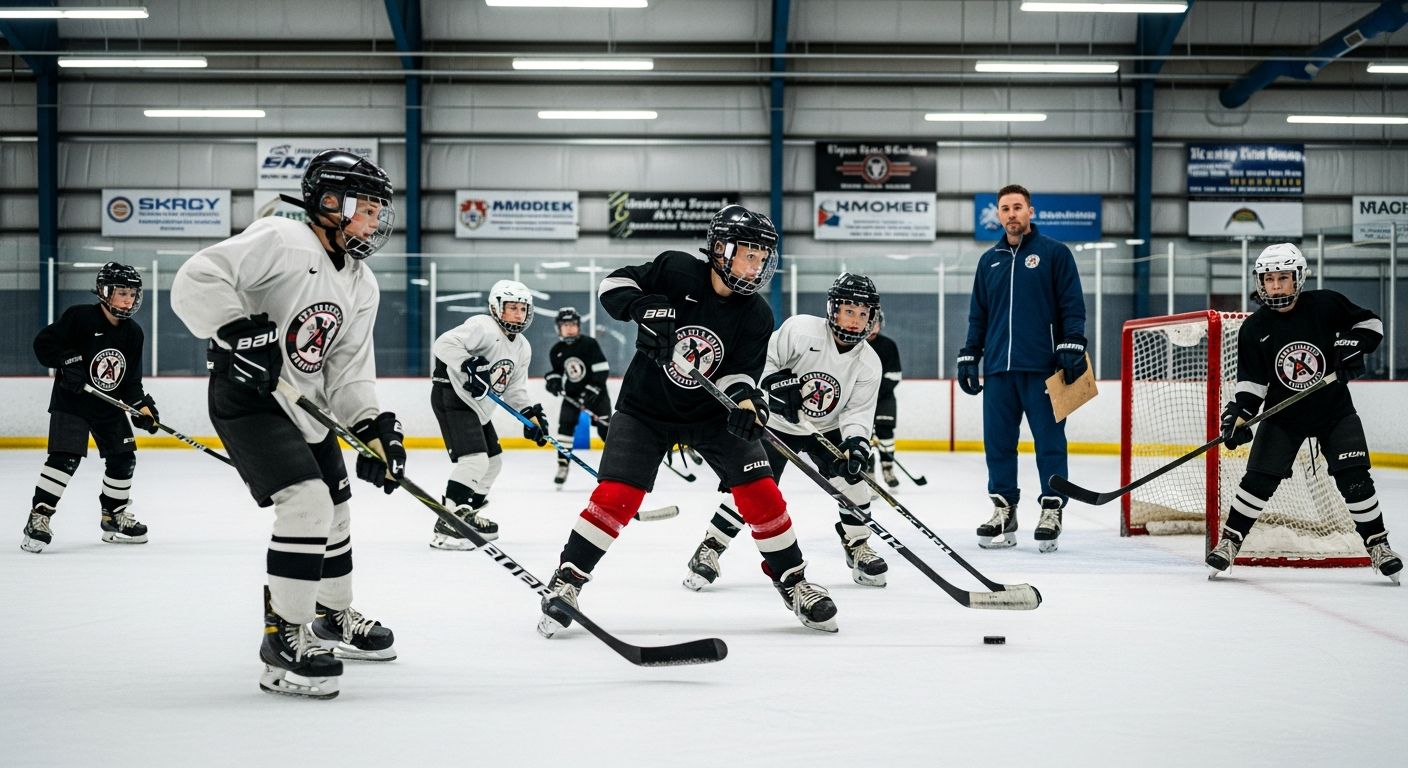
AAA hockey often becomes a focal point around ages 13–16, especially for families thinking long-term about college hockey.
Why Families Choose AAA
- Higher competition
- More games and practices
- Better visibility at major tournaments
- Stronger peer environment
When AAA Makes Sense
- Your player can keep up physically and mentally
- Ice time is earned, not gifted
- The coaching emphasizes development, not just winning
When AAA Can Hurt Development
- Limited ice time
- Constant team changes
- Playing scared instead of confident
AAA is a tool—not a requirement. Many college players develop through AA, high school, or hybrid paths before reaching higher levels later.
AA Hockey: The Underrated Development Path
AA hockey often gets overlooked in recruiting conversations, but it remains a legitimate and productive pathway.
Strengths of AA Hockey
- Larger roles and more puck touches
- Leadership opportunities
- Often paired with strong skills coaching
- Better balance with school and other sports
Many players use AA hockey as a launch point before moving into AAA, high-level high school programs, or junior hockey.
High School Hockey: A Legitimate Route (in the Right Regions)
High school hockey can be a powerful development and recruiting tool—when the environment is right.
Strong High School Hockey Regions
- Minnesota
- Massachusetts
- Michigan
- Wisconsin
- Parts of New England and the Midwest
Benefits of High School Hockey
- Physical maturity
- Leadership roles
- School pride and stability
- Clear identity for recruiters in strong states
Limitations
- Regional variability
- Shorter seasons
- Less national exposure than Juniors
In strong hockey states, high school + Juniors is one of the most common NCAA recruiting paths.
Juniors Hockey: Where Recruiting Becomes Real

Junior hockey is where most serious college recruiting happens.
Common Junior Leagues
- Tier I: USHL
- Tier II: NAHL, NCDC
- Tier III: Various regional leagues (often pay-to-play)
Why College Coaches Recruit Juniors
- Older, physically developed players
- Longer schedules
- Higher game pace
- Clear statistical comparisons
Key Reality Check
Most NCAA Division I players are:
- 18–20 years old
- Have played 1–2 years of Juniors
- Were not rushed into college
Juniors is not a failure to "make it early." It's often the final polish stage.
How College Coaches Evaluate the Pathway
College coaches rarely ask: "Did this player play AAA at 12?"
They do ask:
- How did this player progress year-to-year?
- Are they still improving?
- How do they perform against peers now?
- Do they project physically and mentally?
Trajectory matters more than labels.
The Most Common NCAA Recruiting Paths
Here are realistic, proven pathways seen every year:
Each path depends on growth rate, physical maturity, skill development, and opportunity timing.
Why Understanding the Pathway Changes Everything
Families who understand the pathway:
This knowledge becomes the foundation for showcase selection, league movement, recruiting profiles, video strategy, and coach outreach.
Where Recruiting Profiles Fit Into the Pathway
No matter the path, players need a central recruiting hub that shows:
- Current team and league
- Past development history
- Stats and measurables
- Video highlights
- Academic information
- Contact details
As players move between AAA, high school, and Juniors, a recruiting profile keeps their story intact—and easy for college coaches to evaluate.
Final Takeaway: There Is No Shortcut—But There Is a Smart Path
The youth-to-college hockey pathway is not about racing ahead. It's about:
Families who understand this pathway don't chase leagues—they build players.
And players who keep developing? They stay recruitable.
Ready to Build Your Recruiting Profile?
Keep your story intact as you progress through your hockey journey.