
USA Hockey's New Development League: What It Means for Junior Hockey Recruiting
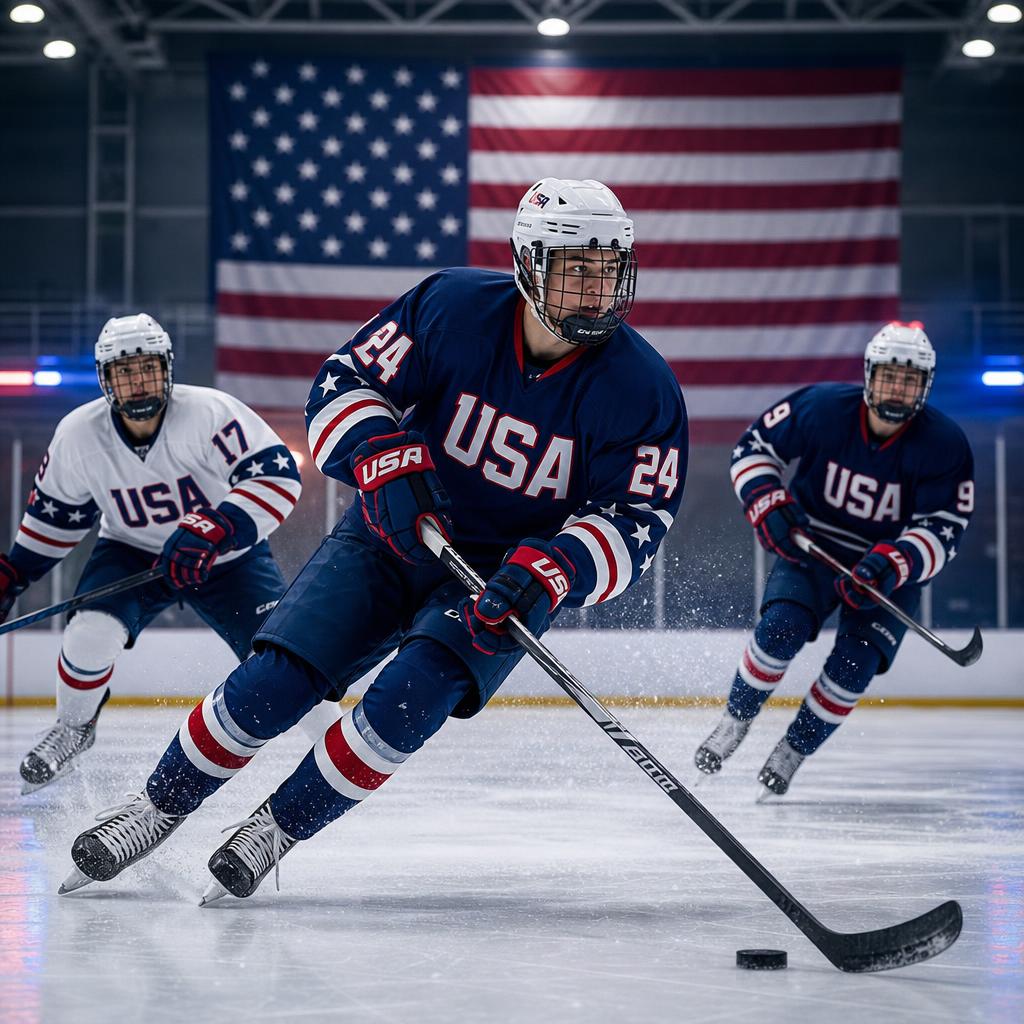
29 organizations. 58 teams. A new development pathway. Here's what hockey parents need to know before the 2027–28 season.
USA Hockey just made one of the most significant announcements in recent youth hockey development.
On October 5, 2026, USA Hockey announced the 29 organizations selected to participate in its new USA Hockey Development League (DL). The league will begin competition in fall 2027, bringing together 58 teams at the 15U and 17U levels.
For families navigating the already complicated world of AAA hockey, junior hockey, and college recruiting, the announcement raises some important questions.
Does your player need to join one of these organizations to get recruited? Will traditional AAA hockey become less relevant? And what happens if your current organization wasn't selected?
Let's break down what we know, what remains uncertain, and what families should be thinking about now.
What Is the USA Hockey Development League?
The USA Hockey Development League is a new national framework designed to provide a more consistent, high-performance development environment for elite youth hockey players.
Its primary focus is preparing athletes for advancement into higher levels of competition, including:
- USA Hockey's National Team Development Program (NTDP)
- United States Hockey League (USHL)
- North American Hockey League (NAHL)
- NCAA college hockey
- Professional hockey
Rather than replacing existing AAA hockey, the Development League is intended to operate alongside the established Tier I youth hockey structure.
USA Hockey received applications from more than 80 organizations and selected 29 for the league's inaugural season.
Each participating organization will field one 15U team and one 17U team.
What Makes the Development League Different?
The league is designed around consistent standards for competition, training, and player development.
Under the announced framework:
| Category | Development League |
|---|---|
| Launch | Fall 2027 |
| Organizations | 29 |
| Teams | 58 |
| Age divisions | 15U and 17U |
| Regular-season games | 40–55 |
| Games against DL opponents | At least 60% |
| On-ice training | Minimum average of 3 sessions weekly |
| Off-ice training | Minimum average of 2 sessions weekly |
The intention is to give talented players access to a more standardized competitive environment while creating stronger connections between youth hockey and the junior recruiting pipeline.
Importantly, the 15U and 17U classifications recognize that players develop at different rates.
A player who isn't ready for a particular opportunity at 15 may be ready at 16 or 17. Development is rarely a straight line.
Why This Matters for Junior HockeyRecruiting
This is where the announcement becomes particularly interesting.
One of the biggest challenges in junior hockey recruiting is evaluating players competing across different leagues, organizations, and geographic regions.
A player dominating one AAA league may be difficult to compare with a player competing in a completely different environment.
By bringing together 58 teams under common development and competition standards, the Development League could make scouting more efficient.
Junior coaches may have more opportunities to evaluate players against comparable competition, and league events could become important recruiting destinations.
But here's an important distinction: greater scouting visibility does not automatically mean a better recruiting outcome.
A player still needs to demonstrate the skating, hockey IQ, compete level, consistency, and character that junior and college programs are looking for.
And talented players will continue to develop outside the Development League.
Does My Player Need to Join the Development League to Get Recruited?
No. The Development League is another pathway, not the only pathway.
USA Hockey has explicitly stated that the new league is not intended to replace the existing Tier I hockey infrastructure.
Many successful junior and college players have developed through traditional AAA organizations, high school programs, and other competitive hockey environments.
There is also an important development happening alongside the new league.
On October 3, the USHL announced that it was exploring closer relationships with the Tier 1 Elite Hockey League and other comparable youth organizations.
Those discussions include scouting, player development, education, and stronger communication between youth and junior programs.
That matters because it reinforces an important point: the broader youth hockey ecosystem will continue to play a role in developing future junior players.
Families should resist the temptation to assume that an organization outside the Development League is automatically a lesser opportunity.
The right developmental environment is about much more than the logo on the jersey.
What Happens to Traditional AAA Hockey?
Traditional AAA hockey isn't disappearing.
The Development League will operate within the broader USA Hockey youth hockey structure, and existing programs will continue to compete and develop players.
However, the introduction of the DL could influence the recruiting landscape.
Some players may receive invitations to join selected organizations. Others may choose to remain with their current programs because of coaching relationships, playing opportunities, academic needs, or family considerations.
Organizations outside the league may also adapt their schedules, recruiting strategies, and development offerings.
Exactly how the landscape changes will become clearer as the inaugural season approaches.
For now, families should evaluate their options rather than assume they must immediately change organizations.
When Do Players Need to Make Decisions?
Although the Development League won't begin play until fall 2027, recruiting and roster decisions will begin much sooner.
Important dates:
- October 5, 2026: Selected Development League organizations announced.
- January 15–31, 2027: Early signing period for returning players.
- February 2027: Open signing period.
- August 1, 2027: Teams may begin practices.
- September 2027: Inaugural regular season begins.
This timeline matters because some families may face decisions about their player's next season before their usual spring tryout schedule.
A player receiving an invitation from a Development League organization should carefully review the commitment, expected role, costs, and development opportunities before signing.
USA Hockey's framework also provides certain protections for players advancing to the NTDP, USHL, or NAHL before their Development League team's first game. Families should review the actual player agreement and release provisions rather than assume every situation is covered.
Seven Questions Parents Should Ask Before Joining a Development League Team
An invitation to a nationally recognized organization can be exciting.
But before making a significant financial or family commitment, ask these questions:
1. What role does the coaching staff envision for my player?
Being selected is one thing. Having meaningful opportunities to develop and compete is another.
2. How much playing time can my player realistically expect?
No responsible program can guarantee exact minutes, but coaches should be able to discuss how they envision using a player.
3. What is the complete cost of participation?
Request a written breakdown of tuition, travel, equipment, lodging, and other expected expenses.
4. What does the weekly development schedule look like?
Ask how on-ice instruction, strength training, recovery, academics, and competition fit together.
5. What relationships does the organization have with junior hockey programs?
Ask about its history of player advancement and how its coaches communicate with junior organizations.
6. What happens if my player receives a junior hockey opportunity?
Understand the release rules, financial obligations, and roster agreement before signing.
7. Is this the best environment for my player's current development stage?
A prestigious organization isn't necessarily the best developmental fit for every athlete.
Will the Development League Make Recruiting More Competitive?
Potentially.
A more concentrated group of elite players could create a more competitive scouting environment.
It could also help junior programs identify players who are prepared for the next level.
However, the actual recruiting impact remains to be seen.
There is no guarantee that participating in the Development League will result in a junior hockey opportunity, NCAA scholarship, or professional career.
What remains important is a player's ability to develop, compete, and communicate effectively with programs that match their abilities and goals.
How Players Can Prepare for the Changing Recruiting Landscape
Regardless of whether your player joins a Development League organization, the fundamentals of recruiting preparation remain important.
Start by developing a realistic understanding of where your player fits in the hockey development pathway.
Build a record of their playing experience, statistics, academic information, and development progress.
Keep highlight videos current and make it easy for coaches to evaluate your player's abilities.
Research junior programs that represent realistic next steps, rather than focusing exclusively on the biggest names.
And remember that recruiting is not always passive. Players and families can benefit from learning how to communicate professionally with coaches and present their information clearly.
A well-organized recruiting profile can help make that process easier.
The Bottom Line: Another Pathway, Not the Only Pathway
USA Hockey's new Development League represents an important change in the American youth hockey landscape.
It may provide a more structured environment for elite development and create new scouting opportunities.
But the most important question for parents remains unchanged:
Where will my player have the best opportunity to develop, compete, and take the next step?
For some athletes, that may be a Development League organization.
For others, traditional AAA hockey, high school hockey, or another development environment may be the better choice.
The goal isn't simply to make the most prestigious roster.
It's to find the pathway that helps your player become the best hockey player they can be.
Get Your Player's Profile Ready to Share
HockeyRecruit helps players and families organize their hockey experience, share recruiting information, and prepare for opportunities at the next level.
Whether your player is competing in AAA hockey, preparing for juniors, or exploring college hockey, having a professional recruiting profile is one step toward being ready when an opportunity arrives.
Create Your HockeyRecruit Profile